14 Jun

Managing Net Assets Released from Restrictions in Nonprofits

restricted net assets nonprofit

Unrestricted net assets are funds that a nonprofit can use at its discretion to support its general operations and any other activities that align with its mission. These assets are not bound by donor-imposed restrictions, providing the organization with the flexibility to allocate resources where they are most needed. This category often includes revenue from membership fees, service fees, and unrestricted donations. Effective financial management in not-for-profit organizations (NPOs) is crucial for ensuring the sustainability and impact of their missions. Proper management and reporting of restricted funds are essential to a nonprofit’s success, enabling organizations to meet donor expectations, maintain compliance, and secure future funding.

How Non-Profit Organizations Should Distinguish Restricted vs Unrestricted Funds in Bookkeeping

Among these, restricted funds play a crucial role by providing financial resources earmarked for specific purposes or timeframes as dictated by donors. When it comes to understanding the financial health of an organization, one crucial aspect to consider is the classification of net assets. Net assets represent the residual interest in an organization’s assets after deducting liabilities, and they can be further categorized into unrestricted and restricted net assets. While both types contribute to an organization’s overall financial position, there are key differences between them that warrant closer examination. These accounts track all forms of incoming funds—from individual donations and grants to program revenue and investment income.

responses to “How Non-Profit Organizations Should Distinguish Restricted vs Unrestricted Funds in Bookkeeping”

  • Donors may require that funds be used only after a certain event has occurred, such as the completion of a matching funds campaign or the achievement of a particular organizational milestone.
  • We love all kinds of net assets, though we have a special place in our hearts for unrestricted net assets.
  • Regular communication with donors about the status of their contributions can also help manage expectations and build long-term relationships.
  • The ability to use these funds without restriction enables nonprofits to respond swiftly to changing circumstances and opportunities, making them a vital component of financial stability.

For example, a donor might establish a scholarship fund that requires the principal to be preserved, with the interest earned used to award scholarships annually. Managing permanently restricted net assets involves Accounting Services for Nonprofits: Benefits and How to Choose the Right Provider careful investment strategies to ensure the principal’s preservation while generating sufficient income to meet the donor’s objectives. This type of asset requires meticulous record-keeping and transparent reporting to demonstrate adherence to the donor’s long-term vision. Nonprofits often rely on a variety of funding sources to sustain their operations and achieve their missions.

Must-Read Books for Fundraisers!

Donors often appreciate knowing that their contributions are helping build a strong foundation for an organization’s future growth and impact. Accurate categorization between restricted and unrestricted net assets enhances transparency and trustworthiness among stakeholders. By aligning fund usage with donor expectations, nonprofits can maintain credibility and foster long-term relationships with their supporters. To better understand donor contributions and their impact on nonprofit net assets, tools like a donor dashboard can provide valuable insights. When managing net assets released from restrictions, nonprofits must adhere to specific accounting practices to ensure transparency and accuracy.

  • These statements should be prepared in accordance with Generally Accepted Accounting Principles (GAAP) or International Financial Reporting Standards (IFRS), depending on the jurisdiction.
  • Since these providers may collect personal data like your IP address we allow you to block them here.
  • It shows the difference between the total assets and liabilities, indicating the organization’s overall financial position.
  • Not-for-profit financial statements play a crucial role in ensuring transparency and accountability for charitable organizations.
  • At this point, the organization records a release from restriction of $5,000, which is then recorded as unrestricted net assets.
  • Funds to be received and/or spent in future years would be part of net assets with donor restrictions.

Additionally, IRS Form 990 plays a vital role in ensuring transparency by outlining reporting requirements for nonprofits. Understanding these elements is crucial for effective financial management within nonprofits. By accurately calculating and categorizing net assets, nonprofits can better allocate resources to sustain their operations and achieve their missions.

What are net assets with donor restrictions?

Instead, the difference between what the organization owns and owes is referred to as net assets. These assets represent the organization’s financial resources that can be used to support its mission and programs. Non-profit organizations navigate the delicate balance between honoring donor intent and managing resources effectively.

restricted net assets nonprofit

5.2 Net assets with donor restrictions

restricted net assets nonprofit

One common situation involves the completion of specific projects or programs funded by donors. For example, a nonprofit might receive a grant to build a community center, with the stipulation that the funds be used solely for construction. Once the center is completed, the funds are released from their restrictions, allowing the organization to reclassify them as unrestricted net assets.

ACCOUNTING for Everyone

  • So if part of the organization’s net assets are comprised of net assets with restrictions, these net assets need to be pulled out and presented separately from total net assets.
  • QuickBooks Online’s class feature is a fantastic way to track each transaction’s specific donor or restricted purpose at a detailed level, within the restricted revenue and related expense accounts.
  • These solutions streamline the accounting process, allowing organizations to focus more on their mission rather than getting bogged down by financial paperwork.
  • This includes the cash in your bank account, the furniture and equipment in your office, and the real estate your organization may own.
  • This reflects the satisfaction of the restriction, allowing the funds to be used for general purposes.

The term net assets may pop up in financial statements whether you have a for-profit or a https://holycitysinner.com/top-benefits-of-accounting-services-for-nonprofit-organizati/ nonprofit entity, so I want to provide some key clarifications. Throughout this article, I will focus on nonprofit lingo, but provide the correlating for-profit verbiage to help make the connection between definitions for anyone already familiar with for-profit accounting. The gross method tracks the usage of all restricted contributions received and utilized during the year.

  • It is important to note that this is just an example and that the specific accounts used and amounts will vary depending on the transaction.
  • These reports often feature case studies, testimonials, and impact metrics, offering a comprehensive view of the organization’s activities and accomplishments.
  • This requires a thorough documentation process to track restricted and unrestricted funds separately.
  • An auditor will need access to where and when funds were open and your balance, additions, and releases through your nonprofit’s fiscal year-end.

restricted net assets nonprofit

Most large-dollar donors and funders want to understand exactly where their money is going before giving it away. So, for stakeholders, restricted funds give them control over how their contributions will further your mission. To assess their financial health, nonprofits can calculate their total net assets by evaluating their assets and liabilities accurately. This calculation is important for effective budgeting and managing finances, as it reflects the organization’s overall fiscal stability.

14 May

Nonprofit Statement of Activities: Comprehensive Guide, Template, and Tips for Success

nonprofit statement of activities example

Regularly reviewing this and other financial statements will help you make well-informed decisions. In this article, we’re going to break down the Statement of Activities and explain how to create one for your nonprofit. By the end, you’ll have a clear understanding of how it can help you manage your nonprofit’s finances better. This page keeps you up-to-date with changes to FASB’s generally accepted accounting principles, best implementation practices and more. Since the Form 990 filed by the nonprofit becomes public information, you can learn much about a nonprofit by reading the information on Form 990.

nonprofit statement of activities example

Financial Ratios

nonprofit statement of activities example

It provides insights into liquidity and cash management instead of detailing income and expenditures. All of the vital accounting statements that you pull together to draw conclusions from are pulled from your nonprofit chart of accounts. Conversely, a statement of activities with natural classification would only list the expense types, such as salaries, utilities, office supplies, and others. Since the statement of activities only needs to be prepared annually for the IRS, it’s tempting to forget about it until tax season comes around.

nonprofit statement of activities example

Importance of Expense Allocation and Its Impact on the Nonprofit’s Efficiency

nonprofit statement of activities example

We also highlighted the words in the first column as they indicate the nature or type of expenses. However, there are nonprofits that qualify as tax-exempt but their donors’ contributions do not qualify as charitable deductions (although they may qualify as business expenses). Examples of these nonprofits include social organizations, chambers of commerce, college fraternities and sororities, amateur sports clubs, employee organizations, and more. There are three different parts to any nonprofit cash flow statement that should be worked into a Non Profit Financial Statement Template. The investing section covers any money the nonprofit has spent for investment or other longer term assets.

Non-Profit Organization Statement of Activities Template

Nonprofit recordkeeping can get a bit challenging, so it is worth noting that accounting software exists to help nonprofits record transactions efficiently. It shows how cash is circulating throughout the nonprofit, and it is another vital component of a non profit financial statement template excel. Over a given period of time, a nonprofit’s cash flows could be either positive or negative. An effective Statement of Activities goes beyond numbers to tell a compelling story of your nonprofit’s financial health and mission impact. Relying solely on spreadsheets and figures may not fully capture the organization’s achievements and challenges.

  • Designed to let you track unlimited funds and manage your books with ease, MIP Accounting® software offers a simple way to manage intricate financial processes in a single, user-friendly system.
  • A nonprofit statement of activities (also known as a statement of financial activities or income statement) that summarizes your organization’s revenue, expenses, and change in net assets for a given year.
  • This can encompass a wide range of activities, from organizing fundraising events to running marketing campaigns and maintaining donor databases.
  • Leveraging technology and automation can significantly improve the accuracy and efficiency of financial reporting.
  • For instance, you might decide to focus on marketing matching gifts to generate the revenue you need to expand one of your core programs.

We focus on financial statement reporting and do not discuss how that differs from income tax reporting. Therefore, you should always consult with accounting and tax professionals for assistance with your specific circumstances. The U.S. Internal Revenue Service (IRS) requires some tax-exempt nonprofit organizations to file Form 990 (some can file Form 990-EZ) each year. (However, churches and some other nonprofit organizations are not required to file.) The title of Form 990 is Return of Organization Exempt From Income Tax. For example, a nonprofit is likely to have a separate general ledger account for each of its bank accounts.

  • A statement of activities is a comprehensive report that provides valuable information about an organization’s finances.
  • This segmentation allows stakeholders to understand the diverse sources of funding that support the nonprofit’s mission.
  • The section on expenses can be just as illuminating as that on revenues for a nonprofit.
  • Unrestricted revenues can be used for any legal expenses that a nonprofit might have.
  • The statement of functional expenses is described as a matrix since it reports expenses by their function (programs, management and general, fundraising) and by the nature or type of expense (salaries, rent).
  • Between fundraising, marketing, and keeping your programs afloat, your nonprofit team likely collects a variety of financial data.

It is important to see the distinction between restricted and unrestricted as only unrestricted revenue can be used to pay bills. When a restriction is satisfied, those monies are moved from restricted to unrestricted and then used for expenses. By homing in on the revenue section, the nonprofit can determine just how stable and secure revenue streams are. If a nonprofit realizes that it’s getting the majority of its revenue from just one source, it might be a good idea to start diversifying revenue.

Budgeting for nonprofits can become complex when it involves several overlapping categories, such as grants, programs, function, and nature. While the statement of cash flows, or cash flow statement, may be a bit difficult to prepare, it is an important financial statement to be read. Under the accrual method of accounting, expenses are to be reported in the accounting period in The Key Benefits of Accounting Services for Nonprofit Organizations which they best match the related revenues. If that is not clear, then the expenses should be reported in the period in which they are used up. If there is uncertainty as to when an expense is matched or is used up, the amount spent should be reported as an expense in the current period. Our intent is to merely introduce some of the basic concepts that are unique to nonprofit accounting and reporting that are required by the Financial Accounting Standards Board (FASB).

The Statement of Activities in nonprofit accounting is akin to an income statement used in for-profit businesses, but with some key distinctions that reflect the unique goals and structure of nonprofits. Unlike for-profit businesses that aim to maximize profits for shareholders, nonprofits focus on fulfilling their mission while responsibly managing their finances. Yes, nonprofit organizations follow certain accounting rules and regulations while preparing the SOA. These include standards set by the Financial Accounting Standards Board (FASB), which are designed specifically for nonprofits, and the Generally Accepted Accounting Principles (GAAP). In the SOA for the year ended June 30, 2022, the funds received via grants and net assets released from restrictions total $25,000.

19 Dec

What Are Total Liabilities? Types and How To Calculate Them

liability accounts

Liabilities are classified into three categories – current, non-current, and contingent. Try FreshBooks for free by signing up today and getting started on your path to financial health. Shaun Conrad is a Certified Public Accountant and CPA exam expert with a passion for teaching. After Certified Public Accountant almost a decade of experience in public accounting, he created MyAccountingCourse.com to help people learn accounting & finance, pass the CPA exam, and start their career.

liability accounts

How are liabilities used in calculating a company’s net worth?

liability accounts

Liability may also refer to the legal liability of a business or individual. Many businesses take out liability insurance in case a customer or employee sues them for negligence. For example, XYZ Corporation provides its employees with a defined benefit pension plan. According to actuarial estimates, the corporation has liabilities in accounting ₹2 million anticipated pension liabilities.

Where Are Liabilities on a Balance Sheet?

liability accounts

Keep in mind your probable contingent liabilities are a best estimate and make note that the actual number may vary. Bonds Payable – Many companies choose to issue bonds to the public in Budgeting for Nonprofits order to finance future growth. Bonds are essentially contracts to pay the bondholders the face amount plus interest on the maturity date. In a sense, a liability is a creditor’s claim on a company’ assets. In other words, the creditor has the right to confiscate assets from a company if the company doesn’t pay it debts.

The Debtor and Creditor Classifications

Similarly, wages payable reflect salaries due to employees, and interest payable indicates interest owed on borrowed funds. A liability is something that a person or company owes, usually a sum of money. Liabilities are settled over time through the transfer of economic benefits including money, goods, or services.

Keep up with Michelle’s CPA career — and ultramarathoning endeavors — on LinkedIn. Liabilities and equity are listed on the right side or bottom half of a balance sheet. Some loans are acquired to purchase new assets, like tools or vehicles that help a small business operate and grow. Non-Current liabilities have a validity period of more than a year. The ordering system is based on how close the payment date is, so a liability with a near-term maturity date will be listed higher up in the section (and vice versa). The liabilities undertaken by the company should theoretically be offset by the value creation from the utilization of the purchased assets.

  • It is a reduction from equity because it represents the amount paid by a corporation to buy back its stock.
  • The important thing here is that if your numbers are all up to date, all of your liabilities should be listed neatly under your balance sheet’s “liabilities” section.
  • It compares your total liabilities to your total assets to tell you how leveraged—or, how burdened by debt—your business is.
  • The settlement of liability is expected to result in an outflow of funds from the business.
  • Understand total liabilities, their types, and calculation methods to enhance financial analysis and balance sheet comprehension.
  • These accounts are essential in tracking and managing debts and obligations arising from past business transactions.

Liability accounts are classified within the liabilities section of the balance sheet as either current liabilities or long-term liabilities. Current liabilities are scheduled to be payable within one year, while long-term liabilities are to be paid in more than one year. Liabilities are an operational standard in financial accounting, as most businesses operate with some level of debt. Unlike assets, which you own, and expenses, which generate revenue, liabilities are anything your business owes that has not yet been paid in cash.

  • Bench simplifies your small business accounting by combining intuitive software that automates the busywork with real, professional human support.
  • The sales tax collected does not have to be remitted to the state until the 15th of the following month when the sales tax returns are due.
  • The balances in liability accounts are nearly always credit balances and will be reported on the balance sheet as either current liabilities or noncurrent (or long-term) liabilities.
  • Keep up with Michelle’s CPA career — and ultramarathoning endeavors — on LinkedIn.
  • Liabilities in accounting meaning show it as an obligation, which makes the companies legally bound to pay back as they do in case of a debt or for the services or the goods consumed or utilized.

It also is often not determined the exact time of the financial obligation. Ideally, non-current liabilities don’t have a high-risk impact on the growth of your business if managed efficiently. These are due for settlement in more than one year, and almost always involve long-term borrowings. A liability is anything you owe to another individual or an entity such as a lender or tax authority. The term can also refer to a legal obligation or an action you’re obligated to take.

liability accounts

Contra accounts are used to record adjustments, reversals, or reductions in the value of assets or liabilities. In conclusion, the management of liabilities is crucial for maintaining financial stability and favorable cash flows. As liabilities impact both the balance sheet and cash flow statement, businesses must carefully consider their decisions regarding debt, tax management, and other obligations. As liabilities increase, they may affect a company’s financial health and stability. High levels of debt can lead to increased interest expenses, impacting profitability and potentially leading to insolvency.

liability accounts

  • They include tangible items such as buildings, machinery, and equipment as well as intangibles such as accounts receivable, interest owed, patents, or intellectual property.
  • Any debt a business or organization has qualifies as a liability—these debts are legal obligations the company must pay to third-party creditors.
  • Liabilities are not just about immediate payments; they include economic responsibilities that a company expects to settle in the future, reflecting past transactions and financial activities.
  • Current liabilities are crucial for liquidity analysis, while non-current liabilities are significant for understanding a company’s long-term financial stability.
  • It is not comprehensive and should not be considered legal or accounting advice on any specific matter.
  • Liabilities are legally binding obligations that are payable to another person or entity.

Current liabilities are debts that you have to pay back within the next 12 months. The important thing here is that if your numbers are all up to date, all of your liabilities should be listed neatly under your balance sheet’s “liabilities” section. No one likes debt, but it’s an unavoidable part of running a small business. Accountants call the debts you record in your books “liabilities,” and knowing how to find and record them is an important part of bookkeeping and accounting.

19 Nov

Nonprofit Balance Sheet Guide & Template

balance sheet for nonprofit

Learn how themed events boost donor engagement, increase giving, and create unforgettable experiences using immersive design, technology, and mission-driven storytelling. Temporarily restricted net assets often arise in the form of restricted donations or grants. The funds have been assigned for a particular purpose or for a certain period.

Statement of Financial Position vs Balance Sheet

This account may or may not be lumped together with the above account, Current Debt. While they may seem similar, the current portion of long-term debt is specifically the portion due within this year of a piece of debt that has a maturity of more than one year. For example, if a company takes on a bank loan to be paid off in 5-years, this account will include the portion of that loan due in the next year. Fund accounting makes it easier to be as transparent and clear about your organization’s finances as possible.

  • Organizations can personalize the funds they account for to match their unique mission and work.
  • While the process can be tedious, compiling nonprofit financial statements allows your organization to evaluate its financial standing and stay accountable to stakeholders.
  • If a company takes out a five-year, $4,000 loan from a bank, its assets (specifically, the cash account) will increase by $4,000.
  • You can use this data to assess how your nonprofit is achieving its mission-driven goals and what adjustments, if any, need to be made.
  • Understanding the nonprofit balance sheet is essential for stakeholders to assess financial health, liquidity, and the organization’s ability to fulfill its mission effectively.

Is a non profit balance sheet the same as a statement of financial position?

balance sheet for nonprofit

Partner with the nonprofit accountants at Jitasa to create and interpret your statement of financial position. Chances are you’ve looked at your organization’s profit and loss report and never thought much about the balance sheet. In this sample, the fixed assets have been mentioned before current assets for a change. This is another way you can make a summary of the assets and liabilities of your Nonprofit. But the reality might be that a significant portion of your net assets represent restricted funds that cannot be used for operational costs or immediate expenses.

  • Nonprofits use this statement to share what their organization owns and what it owes.
  • The balance sheet also indicates an organization’s liquidity by communicating how much cash an organization has at present and what assets will soon be available in the form of cash.
  • As compared to cash, these assets are not very liquid—however—they are extremely important in relation to the long-term impact of your work.
  • Most nonprofits share these statements to be entirely transparent with their donors; often using these statements in their annual or impact reports.
  • Many of these statements are similar to what for-profit businesses file, but some significant differences exist.
  • These articles and related content is not a substitute for the guidance of a lawyer (and especially for questions related to GDPR), tax, or compliance professional.

What’s included in a nonprofit’s balance sheet (Statement of Financial Position)?

balance sheet for nonprofit

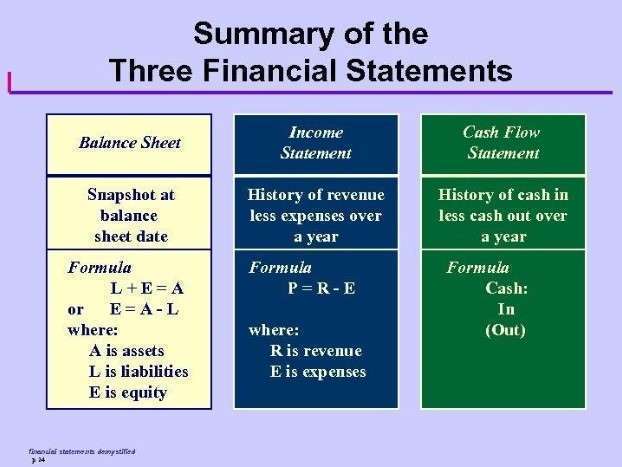
We briefly go through commonly found line items under Current Assets, Long-Term Assets, Current Liabilities, Long-term Liabilities, and Equity. The Statement of Financial Position is typically part of a monthly financial packet, which may also include a Statement of Cash Flows and a Statement of Activities. Many nonprofit organizations choose to outsource financial reporting to nonprofit accounting experts, like JFW Accounting Services. The last thing to note is that gaining a comprehensive picture of a nonprofit’s accounting and financial health relies on more than the snapshot a balance sheet provides. Reading and understanding other financial documents, briefly covered below, is necessary to fill the gap. In contrast, the balance sheet aggregates multiple accounts, summing up the number of assets, liabilities, and shareholder equity in the accounting records at a specific time.

Nonprofit Statement of Financial Position Template

Experts recommend that you maintain three to six months of cash reserves available to make sure you can continue functioning smoothly even during financial uncertainty. Short-term liabilities are due within one year, while long-term liabilities are payable over multiple years. Assets are typically listed in order of liquidity (how easily they can be converted to cash). It’s also the mandatory method for nonprofits that must adhere to Generally Accepted Accounting Principles (GAAP), such as those dependent on federal grants or those undergoing an audit.

balance sheet for nonprofit

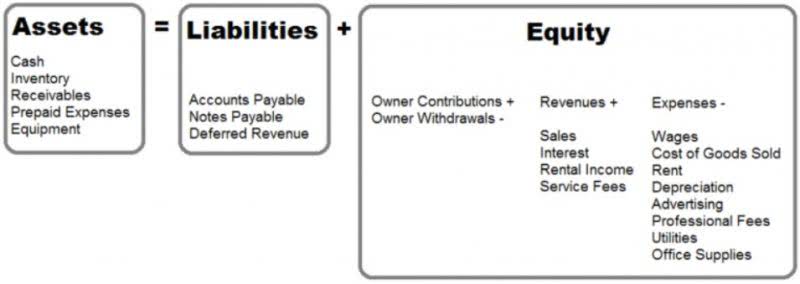
Below you can see an example non profit balance sheet which you can download here for free. Retained earnings is the cumulative profit of a business, but a non profit does not display retained earnings on the balance sheet. Instead, a non profit will have “Net Assets” which is the difference between the organization’s Assets and Liabilities. Use this free excel template to generate a balance sheet (statement of financial position) for your non profit.

balance sheet for nonprofit

balance sheet for nonprofit

Nonprofit financial statements provide a snapshot of your organization’s financial health and performance. They paint a picture of your organization’s financial health so you can make informed decisions. The above template is a standard Balance Sheet example that can be easily used by any Nonprofit organisation https://holycitysinner.com/top-benefits-of-accounting-services-for-nonprofit-organizati/ for declaring its assets and liabilities. It has current assets mentioned before long term assets and similarly, current liabilities mentioned before long term liabilities.

⃣ Income statement

  • Assets are typically listed in order of liquidity (how easily they can be converted to cash).
  • Assets are usually listed on a balance sheet from top to bottom by rank of liquidity (i.e. from most easily turned into cash to those assets most difficult to turn into cash).
  • Nonprofits must include a balance sheet when applying for federal tax exemption and filing taxes.
  • Pay attention to the balance sheet’s footnotes to determine which systems are being used in their accounting and to look out for any red flags.
  • On the Statement of Financial Position, your assets break down into current assets, fixed assets, and other assets.
  • If you don’t already use accounting software, it’s time to make the investment.
  • When you’re reviewing your cash flow statement, look at the organization’s spending to make sure it aligns with the mission and goals.

The rest of the organization’s 2023 report is packed with interesting insights, quotes from individuals they’ve helped, and more. If your nonprofit is just accounting services for nonprofit organizations starting out, use this annual report as inspiration. Your nonprofit must include natural and functional classifications for all expenses. Organizations will separate these expenses by programs, fundraising, and management. Board members and other leaders can use this statement for better insight into how much is available to pay expenses.

09 Oct

Guide to AI in accounting: Trends, tools, and stats Karbon resources

ai and bookkeeping

AI’s capability to detect anomalies in financial data makes it a crucial tool for fraud detection and risk management. By continuously monitoring transactions, AI can identify unusual patterns or behaviors that may indicate fraudulent activity. This early detection can prevent financial losses and maintain the integrity of the accounting process. The best way to embrace the use of AI in your accounting processes is to understand the multitude of potential AI applications and how AI can contribute to business profitability. Rather than spending a lot of time wrangling with ChatGPT chatbots or data science models in Python or R language on your own, consider using modern software that embeds AI technology.

Dynamic Excel Visuals for Engaging Data Presentation

AI enhances decision-making by processing and analyzing large datasets in real-time, offering insights that traditional methods cannot provide. This allows finance teams to adjust strategies dynamically, improving their competitive edge. The integration of AI and blockchain represents a powerful combination for enhancing transparency and fraud prevention in accounting. When implementing AI in accounting, ensuring compliance with regulations and addressing ethical considerations are critical. These factors are essential for maintaining trust ai and bookkeeping and transparency in AI-driven processes.

  • To exemplify how technology will be working alongside professionals, Farnell raised the fact that many companies now have AI tools called “co-pilot”, highlighting that the clue is in the name.
  • It learns from historical patterns to improve accuracy in data entry.
  • However, with AI, businesses can move toward continuous audits, where financial transactions are monitored and verified in real-time.
  • When handling large datasets manually, mistakes are bound to happen, but AI ensures that such errors are significantly reduced.
  • ClickUp Brain is an AI-powered virtual assistant that uses natural language processing to help with everything from financial management and project detailing to client check-ins and meeting updates.

Main Menu v2 – Solutions – CAS

ai and bookkeeping

Businesses can allocate resources to essential areas like customer engagement or product development. We have compiled the Best 5 AI Bookkeeping Tools for 2025 for small businesses and solopreneurs.

The Future of Accounting: How AI and Automation Are Changing Bookkeeping

Automation reduces human error, increasing accuracy and compliance. Real-time reporting is another trend that AI will continue to enhance. AI systems can automatically generate reports as transactions occur, giving businesses instant insights into their financial health. This https://www.bookstime.com/articles/net-sales capability enables companies to make timely decisions based on up-to-date financial data. For example, cash flow analysis or expense tracking can be done in real-time, allowing businesses to respond quickly to financial challenges or opportunities. However, while the adoption of AI offers numerous advantages, businesses must also navigate potential challenges.

ai and bookkeeping

The technology’s precision enhances the reliability of financial statements. This accuracy can be especially beneficial during audits or financial reviews. Automated accounting tools often sync with other business systems like CRM and ERP.

ai and bookkeeping

ai and bookkeeping

As digital transformation reshapes industries, AI ensures small businesses remain competitive and compliant in an ever-evolving marketplace. Will Farnell started by highlighting the growing importance of AI in the accounting industry. “What’s the impact of AI and Machine Learning on us, as accountants and bookkeepers? It’s really something that we all need to be thinking about”. The conversation quickly turned to the pivotal moment in November 2022 when ChatGPT brought AI to the forefront of public consciousness.

Improved Data Accuracy and Reduced Errors

By integrating with major accounting software and over 11,500 financial institutions, Dext seamlessly updates financial records in real-time, providing businesses with accurate, actionable data. The AI features also enhance compliance and data integrity by automatically removing duplicates, tracking mileage, and extracting key details from bookkeeping supplier statements. With secure storage for financial records and encrypted data protection, Dext offers a future-ready solution for businesses looking to streamline bookkeeping operations.